AI, Player-Coaches, and Fixing The Management Problem
John Honovich
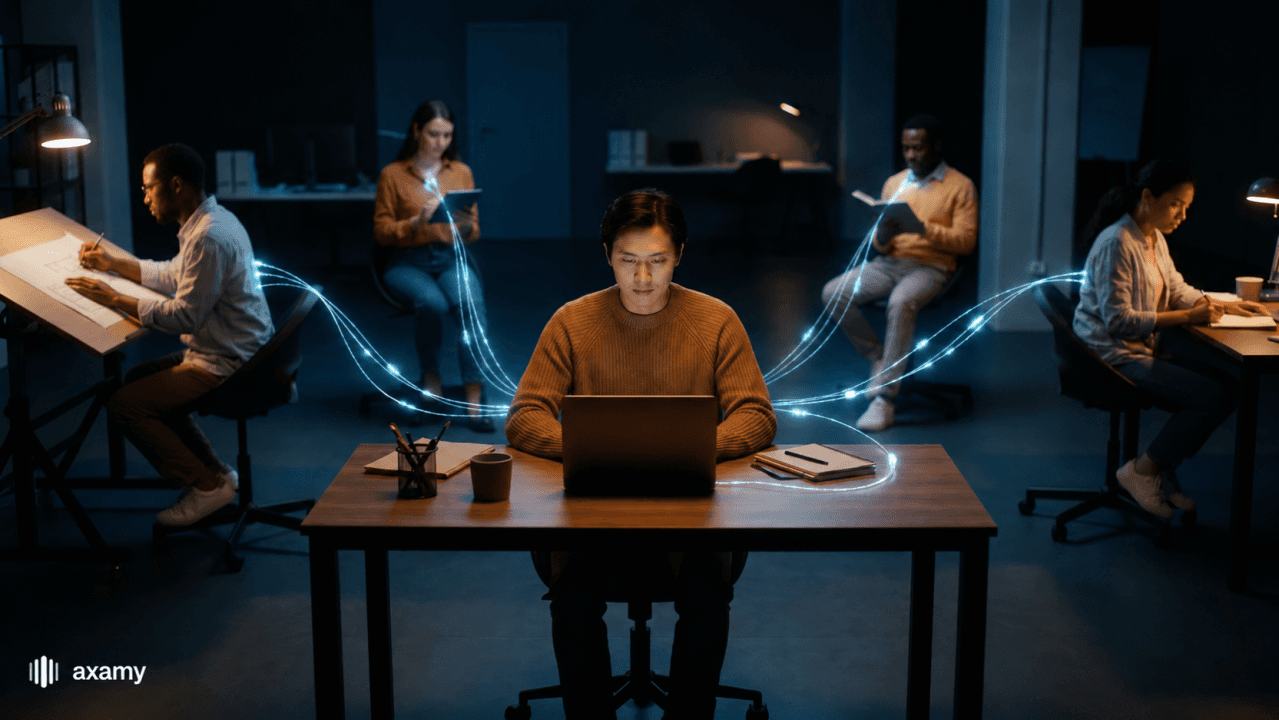
Jack Dorsey, Brian Armstrong, and Mark Zuckerberg have all said something similar recently: AI is cutting management layers, and what replaces them is the "player-coach", someone who stays hands-on with actual work while still running a team. The trend and logic are real.
The second-order effect that needs to be solved next is how the coaching actually gets done.
The coaching time problem
Good organizations are typically founded and led by people with deep domain expertise, people who really understand what they're building, who the customer is, what matters, and what doesn't. And what happens as those organizations grow is that those people hit a time wall fast.
I've been running teams for many years, and the one-on-one coaching math just runs out quickly once you get past a handful of people. With 5, 8, 10 (or more) people on your team, the hours simply aren't there. You try doing things in groups, and you get a lot of inefficiency; some people find it too basic, others too advanced.
The cost and inefficiency of management layers
The typical solution is to add a management layer to carry that load. That's genuinely expensive. In the US you're probably spending tens of thousands of dollars per employee just on the managers above them.
And then on top of the cost, there's an effectiveness problem. There are certainly managers who combine strong domain expertise with real organizational skill, but in my experience, that combination is the exception. More often, the manager is good at organizing things and running meetings, but doesn't understand the domain well enough to actually help people make decisions. So you get a translation cost: the expert at the top knows what needs to happen, tries to convey it through the manager, and the manager passes along something they don't fully understand. Employees figure this out and wind up going back to the expert anyway. You're paying for the layer and not getting the leverage out of it.
What AI actually changes
Like many people, I've seen things get done five to ten times faster with AI, whether it's code, reporting, analysis, or research. That compression is real, and it's what makes the player-coach model make sense: if an expert's execution time has dropped that much, they can stay closer to the work without needing as many layers in between.
But what that same compression does to the coaching problem is worth thinking about carefully. When you can do something yourself in 20 minutes that would otherwise take 20 minutes to explain, 20 minutes to review, and probably another round after that, the temptation is to just do it yourself. I've felt that pull personally. The issue is you still run out of capacity, you can't do everything yourself, and you still need a team that can operate independently.
Using AI for collaboration
The first wave of AI tools has focused on making individuals more productive, and that part has worked well. The next thing to figure out is how AI works across a team, not just for a single person, because that's the actual job of a player-coach. That's what we're working on with Axamy.
A player-coach doesn't know everything that's happening at the ground level. The people doing the work find problems, hit blockers, make judgment calls the coach needs to know about. And the coach needs to give feedback, communicate priorities, and understand where each person actually is on things. That back-and-forth has to happen without consuming the time the player-coach freed up by being more productive themselves.
The first piece is planning. A player-coach needs to be able to quickly figure out what each person on the team is doing tomorrow, what's happening next week, and whether the work lines up with what actually matters right now. What makes that feasible is an AI system that reasons through the work: looking at what's open, estimating how long things will take, and helping the coach put together a daily and weekly plan in minutes rather than in a long planning meeting.
The second piece is updates. Once there's a plan, the coach needs to know what's actually happening against it. Voice-based updates let people log progress naturally, and the AI figures out which tasks and issues each update relates to without the person having to navigate to different systems or fill out forms. Anyone who has tried to get a sales team to keep a CRM current knows how much friction that creates. When updates flow in easily, the AI can reason through where things stand, what's left, and what needs a decision.
The third piece is training. Going back to the group session problem from earlier: some people find it too basic, others too advanced, and a lot gets lost in between. AI-based training that goes at each person's pace and focuses on specific gaps is a much better fit. The player-coach can see that someone needs to get better at something and the system handles the teaching.
Together, these work as a system. Planning gives the coach a clear picture of where things are going. Updates keep information flowing back from the team. And training gives the coach a way to act on what they see without consuming more of their time. For the people on the team, they get clearer and more timely feedback, which, in my experience, reduces stress and helps people get more done.
I think there's a lot more that can be done to help player-coaches and their teams work together more effectively as AI keeps moving.